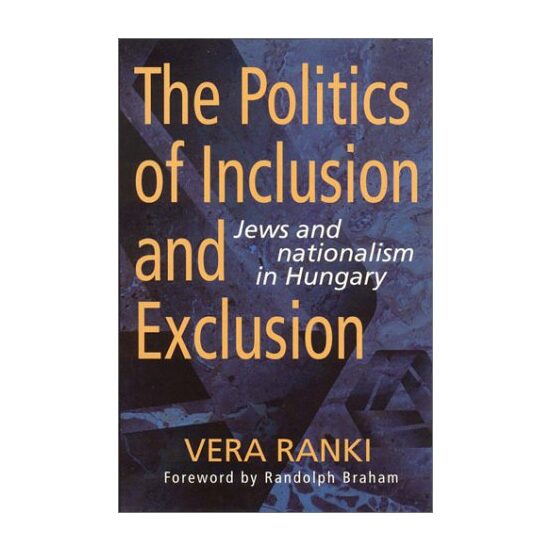
The Politics of Inclusion and Exclusion
Prețuri în 1 magazin
| Magazin | Preț | Stoc | Actualizat | |
|---|---|---|---|---|
| anticexlibris.roCel mai mic | 8,99 lei | În stoc | 2026-11-18 | Vezi oferta |
Istoric preț minim
Prețul minim pe zi, din toate magazinele urmărite. 10 zile de istoric.
Nota din toate magazinele
Nu am colectat încă note pentru acest produs. Le adăugăm pe măsură ce verificăm paginile magazinelor.
Descriere
The case of Hungarian Jews in the 19th-20th centuries, first included in the Hungarian nation and then, after 1919, excluded from it, is a poignant illustration of the changing politics of nationalism and the process of exclusion to the point of genocide. Hungarian nationalism, which emerged in the 19th century, construed the nation as a cultural entity and tended to include Hungarian-speaking, assimilated Jews in the dominant Magyar minority of the Kingdom. The treaty of Trianon changed the formula of Hungarian nationalism and made the Jews not only outsiders, but also a social hindrance.
Antisemitism, which was a rather marginal phenomenon in the 19th century, became a cornerstone of the official ideology under Horthy. Horthy's Hungary cooperated willingly with the Nazis in the "solution of the Jewish question". The anti-Jewish laws of 1938-41 were enacted without Nazi pressure and were supported by popular opinion.
The regime was also instrumental in the deportation of Jews in 1944. Thus, the Holocaust in Hungary was a direct outcome of the country's interwar nationalism. Tragically, the Jews of Hungary relied on the "assimilationist social contract" up to the end of the war; they believed in dialogue with the authorities, and did not protest.
Descriere bazată pe informațiile furnizate de magazin.