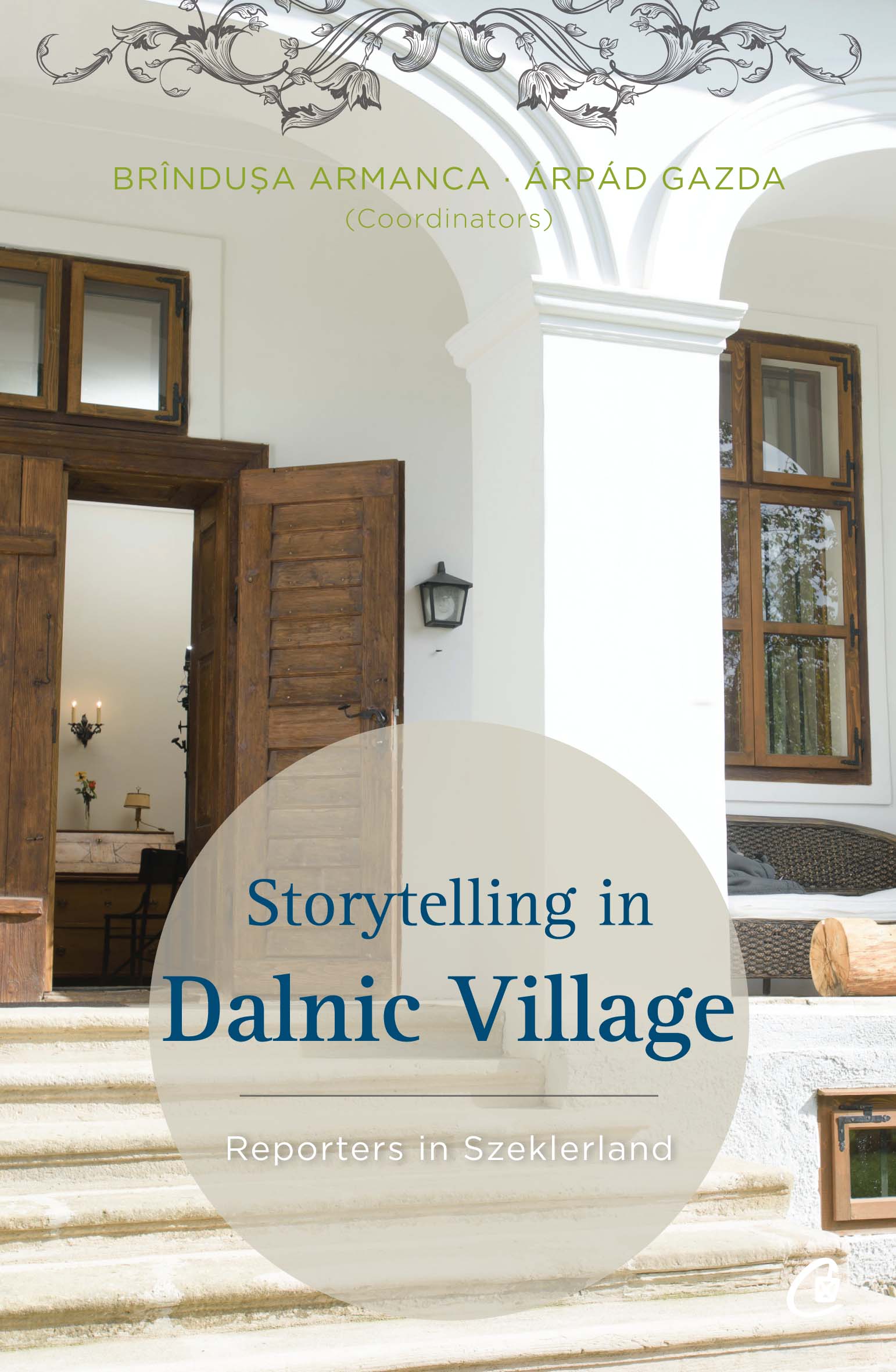
Storytelling in Dalnic Village
Prețuri în 1 magazin
| Magazin | Preț | Stoc | Actualizat | |
|---|---|---|---|---|
| curteaveche.roCel mai mic | 46,62 lei51,80 lei | În stoc | 2026-11-15 | Vezi oferta |
Istoric preț minim
Prețul minim pe zi, din toate magazinele urmărite. 7 zile de istoric.
Nota din toate magazinele
Nu am colectat încă note pentru acest produs. Le adăugăm pe măsură ce verificăm paginile magazinelor.
Descriere
The Romanian version of this book was published as <i>Dalnic. Istorii nespuse din satul lui Doja. Reporteri în Secuime</i>.
The Hungarian version of this book was published as <i>Dálnok felfedezése. Román és magyar újságírók Dózsa falujáról</i>. We ransacked the place for clues; we knocked on gates to see ruined mansions and marvelous parks towered by centuries old Gingko biloba trees; we haunted the graveyard uphill; we partook in the Reformed Church Service and also of woodpecker’s diligence, as it was pecking nude the steeple eaves; we ate potato bread, red onions and smoked lard, also savoring sweet nutty vanilla kürtös which beat all else their kind, by any standards; we took snap shots and videos of the Doja massive statues; we visited the local museums and the fabled mofettes; we enjoyed meeting carnival Hussars and peasants displaying baskets full of potatoes, onions and pumpkins, on local Thanksgiving Day fair [...].
The nights spent in Gál Mansion are as true as life, nothing left to invention: we did sit under the four-trunk walnut tree, sprawled on the sofas in the aristocratic halls, and dreamt in front of the fireplace, thereby fanning the fertile dialogues of this book born out of journalistic prying and childish joy at stories alive. We actually urge you to go see for yourselves! Brîndușa Armanca BRÎNDUŞA ARMANCA is a journalist and a university professor of journalism.
She has worked in highly acclaimed teams at Radio Free Europe, ‘22’ magazine, Expres, Timișoara and Ziua, where she held the position of editorial coordinating manager, as well as TVR Timișoara, where she was head of the regional branch for six years. She received several national and international awards for her TV films. In addition to publishing hundreds of newspaper articles and producing numerous radio and TV broadcasts, she also published eight books: Televiziunea regională în România (Regional TV in Romania), Ghid de comunicare pentru jurnaliști și purtători de cuvânt (A Communication Guide for Journalists and Spokespersons), Mesajul lui Crypto (Crypto’s Message), Învață să învingi (Learn to Win), Media Culpa, Istoria recentă în mass-media (Recent History in Mass-media), Frontieriștii (Border-Crachers), Abolirea timpului buimac (Overturning the Cluttered Time).
She was the head of the Romanian Cultural Institute (ICR) in Budapest for six years and president of EUNIC-Hungary. In 2005 she received the Romanian Academy Cultural Award and in 2012 the Hungarian Ministry of Culture honored her with the Cultural Award for cultural diplomacy. She is also a member of the Romanian Writers’ Association and member of the Romanian board of the Association of European Journalists — AZIR / AEJ.
ISTVÁN BIRÓ is a photographer based in Cluj-Napoca (Romania), specialized in editorial and stage photography, his most recent field of interest being portraits. He is available for commissions in any of the abovementioned fields and also in commercial photography. While studying at the University of Art and Design Cluj-Napoca, he has started out in 2000 as editorial photographer at the newspaper Krónika, where he still works as picture editor.
He regularly does assignments for the MTI (Hungarian News Agency), one of the oldest news agencies in Hungary. He took on stage photography in 2005, at the Hungarian Theatre of Cluj, and since then he has worked for various theatres (in the cities of Satu Mare, Tîrgu Mureș, Iași). He has documented performances by acclaimed directors such as Gábor Tompa, Andrei Șerban, Silviu Purcărete, Robert Woodruff, Matthias Langhoff, David Zinder, Michal Dočekal.
His approach is to catch the unrepeatable instant of theatre, immortalizing the evanescent, mindfully transposing the scene into photographic space. MARIUS COSMEANU is a journalist and sociologist, winner of the ’Otto von Habsburg’ European Award. As a journalist, he worked for such publications as Cotidianul, Academia Cațavencu, Corso (editorial manager) and România Liberă.
He has published over a thousand articles in Romania and abroad and has been keeping a personal blog for the last few years. As a researcher, he has collaborated with the World Bank, International Labour Organization, Coca-Cola HBC, Flora and Fauna International as well as other international organizations. He held the position of national assessor, where he coordinated several projects on illegal migration, public administration, human rights, environmental issues and minorities.
He currently works as a specialist consultant. He graduated from Masters Programme Ethnic and Minority Studies (ELTE-UNESCO, Budapest), and is president of Tempo Giusto, an organization focused on slow media projects. He has received scholarships from UNESCO, German Marshall Fund, Open Society Institute, ERSTE & Bosch and the Institute for Human Sciences.
MONA DÎRȚU had been training to become a Physics and Chemistry teacher, but opted for journalism instead, building a twenty-year-long career in the general press (the former Monitorul network), business press (editor-in-chief of Business Magazine and later on Money Express) and in the digital media, where she was head of TVR’s online department. In 2012 she initiated several journalism/corporate, writing and entrepreneurship projects. In 2014 she published a book co-authored with Andreea Roșca, entitled Cei care schimă lumea (The Gamechangers) – the first study on how the first generation of post-revolution entrepreneurs think, make decisions and act.
She is also co-author of the Monday Memo newsletter, a business and info digest with a quickly expanding reader base. In 2015 she and the Friends for Friends Foundation developed a writing course for company and NGO employees. She continues to conduct journalistic projects, is a member of the Superwriting Awards jury and, from time to time, she writes her own blog posts at monadirtu.ro ÁRPÁD GAZDA became a journalist following his active involvement in the 1989 Romanian Revolution in Timi
Descriere bazată pe informațiile furnizate de magazin.


